

Research
The Packard Center believes the key to our success is collaboration. Innovation can only be forged when scientists share ideas, successes, and even difficulties. The hope is in the science.
From the beginning, the scientists of the Robert Packard Center for ALS Research at Johns Hopkins have believed the key to research for the cure is synergy. While all the Center’s individual projects have merit – they’re all worthy of funding – the trail to success can only be forged by the sessions where scientists share ideas, successes, and even difficulties.
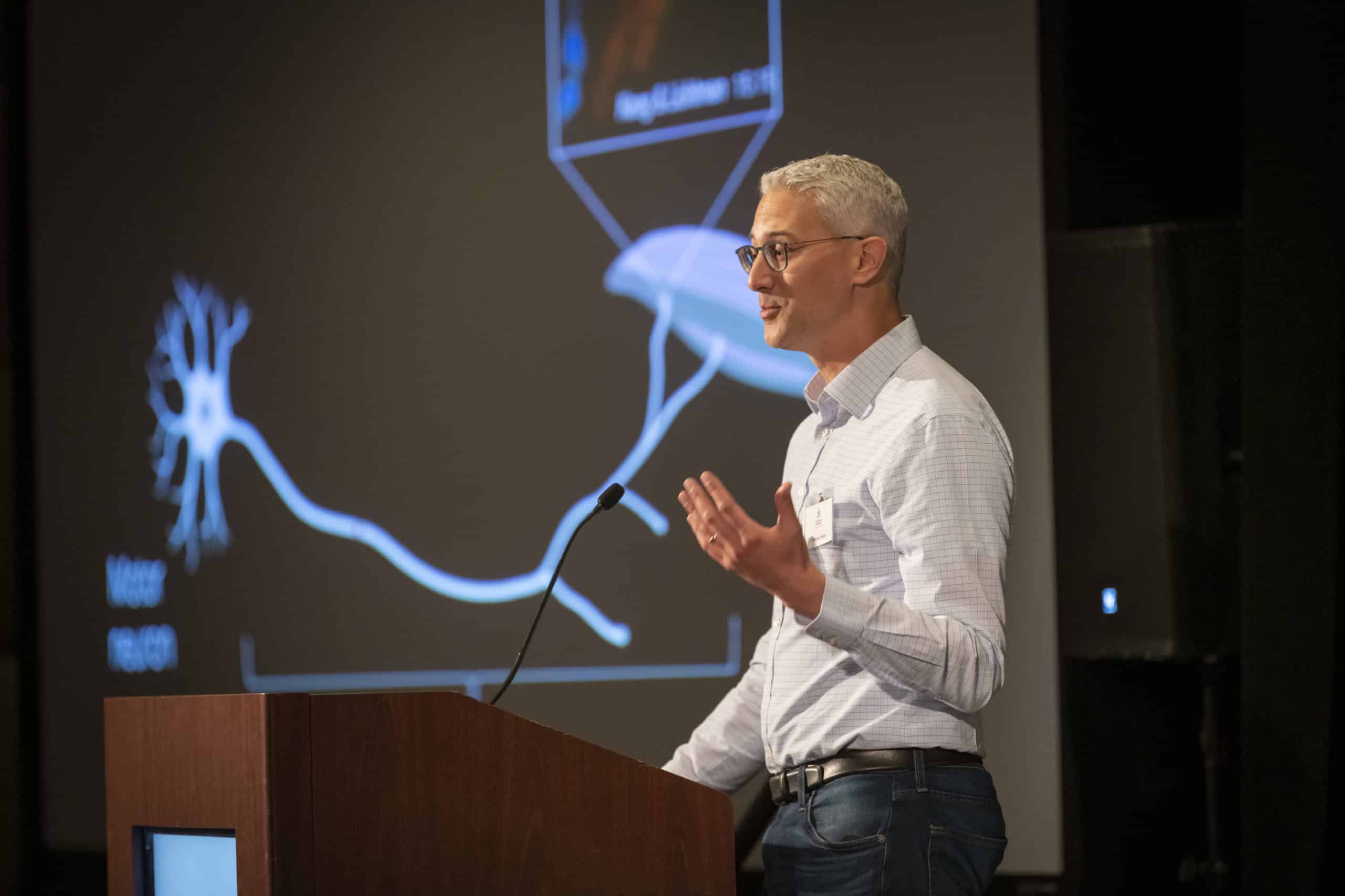
Most NIH-funded program-based projects require hours of collaboration in the planning stages. Yet that typically drops off once project funding begins and researchers have less incentive to work together. Although the Center supports more than 100 scientists, technicians and lab staff, its members collaborate throughout projects. The spark for this comes, in part, from regular monthly investigators’ meetings that are required of Center scientists, as well as yearly symposia. It also comes from central planning that insures that each lab works on a crucial piece of the overall puzzle.



The Packard Center is 100% funded through philanthropy.
Your gift enables us to fund the brightest researchers to help unlock the mysteries of ALS. Every gift is vital to our success. The hope is in the science.